Why Weightlifting Shoes are important
Specialized weight lifting shoes are showing up more and more frequently on the gym floor. Is this just the latest in a long line of trendy but useless training peripherals designed to fleece iron pumpers, or are training shoes a serious piece of the weight lifting equation? Before you invest in a pair of weight training shoes, you owe it to yourself to do the due diligence.
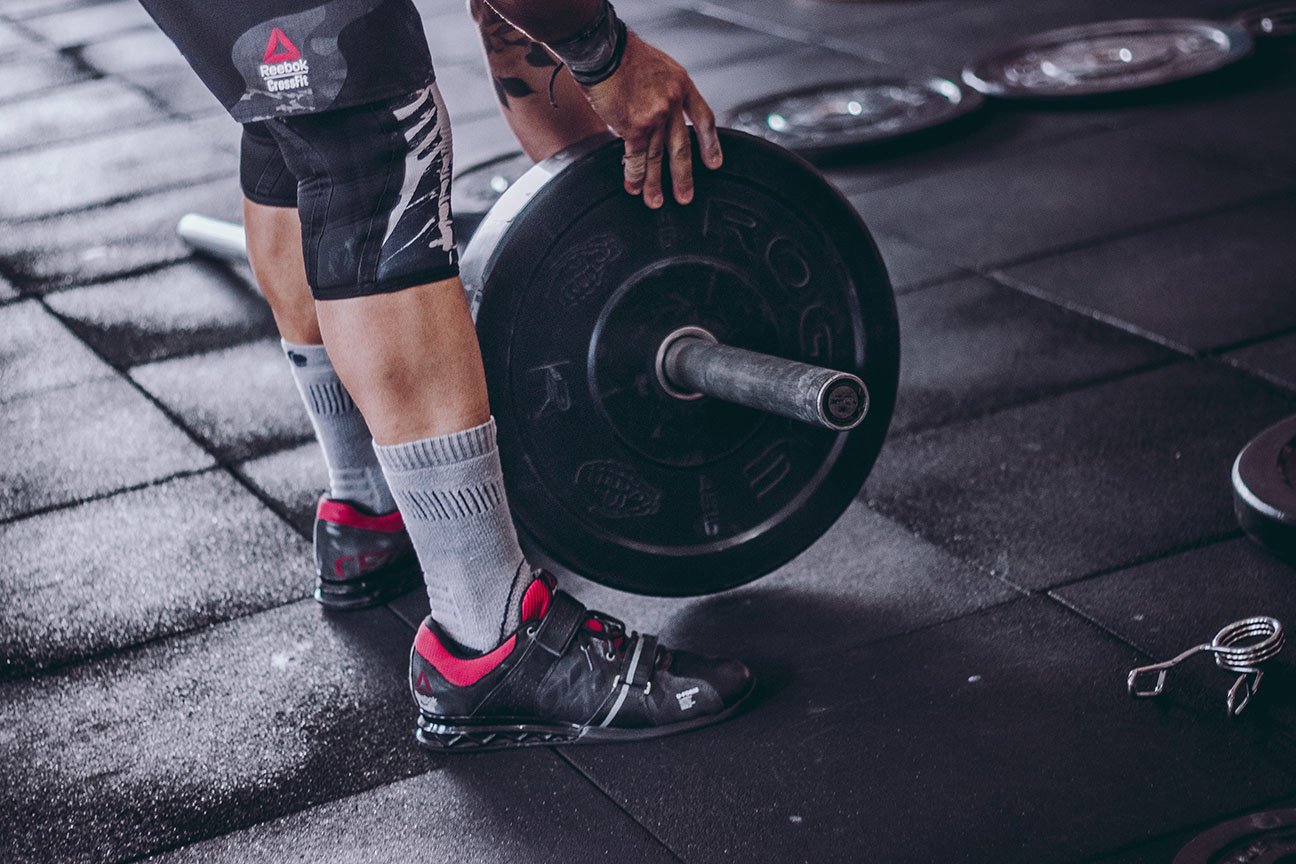
Why are the right shoes so important for your lifting?
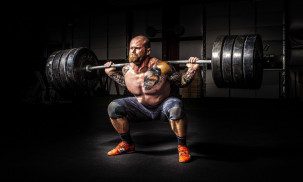
Many weight lifting exercises, especially Olympic moves, involve the exertion of a tremendous amount of force that is supported through the feet. Weight lifting shoes have a raised heel that is extremely solid. This eliminates the squishy padded shock absorption that you would experience with a normal running shoe. The shock absorption effect of a running shoe will convert to a slight loss of power on such movements as the push press. That's because you'll experience a loss of kinetic energy while becoming less stable. With a hard heel, the force that you initiate will go straight to the barbell, where it belongs.
The raised heel of a good weight lifting shoe is about an inch tall, which puts the heel in a slightly elevated position. This allows the torso to be more erect by putting the knee further out over the toe when performing lifts like squats, cleans, and the Olympic lifts.
Limited ankle mobility will allow your body to be far better aligned for straight up and down movement.
A good pair of weight lifting shoes will also make your lifts safer. They will improve your balance and stability. As well as providing physical benefits, knowing that you've got solid footwear on will give you a psychological lift, fueling your workout intensity, both physically and mentally.
Although it may sound a bit far fetched, the best shoes for weightlifting can even help you to lift more weight. The simple act of upgrading from bare feet (or running shoes) to weight lifting shoes can add as much as 10 pounds to your squat weight.
Best Weightlifting Shoes
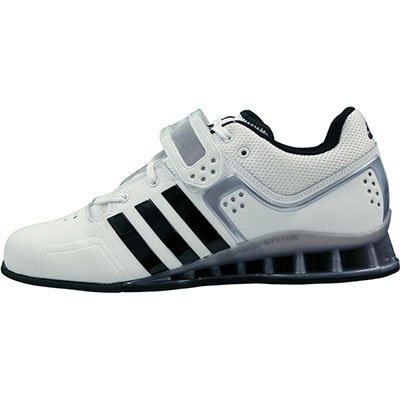
Adidas Adipower Weightlifting Shoes Review
Adidas Adipower weightlifting shoes had created a lot of controversies around when they first appeared on the market, allowing weightlifters from all over the world to take their performance to the next level. Since many weightlifters are rather skeptical about the efficiency of Adidas Adipowers, these shoes were not as popular as others, even though many participants in the Summer Olympic Games have used them.

Adidas Adipowers have firstly appeared on the market in 2008, coming with a kangaroo leather upper that was very resistant. Yet, it did not provide decent breathability to the user, which made them difficult and unpleasant to use. Moreover, the first Adidas Adipowers had the annoying habit of sliding to the side of the foot during the workout session. Adidas made sure to solve this problem by making the tongue more of a sock liner, so it was not sliding to the sideways anymore.
Adidas Adipower weightlifting shoes are ideal for any weightlifter since they were specifically created to ensure them of flexibility, comfort, and cushion while lifting weights. The solid construction can resist the extreme effort, so investing in these shoes represents a wise choice that will bring you plenty of benefits in return.
The woodblock heel was completely removed from the old Adidas Adipowers and was replaced with a TPU heel that is significantly lighter and stronger as well. Not only do they provide weightlifters with a better experience within their performance, but they also erase away many previous downsides that made them inappropriate for use.
Adidas Adipower is the best weightlifting shoes available on the market, coming with many great features for the buyers and a reasonable price that makes them very valuable and also affordable. Even though several other brands manufacture similar shoes, they cannot beat Adidas Adipowers, which are expected to remain the top weightlifting shoes for the next four years.
Pendlay Do-Win Weightlifting Shoes Review
When Pendlay came up with its weightlifting shoes, the customers weren't surprised. If you consider that the company has been manufacturing a wide range of bars, weights, and other gym equipment, it makes sense to launch a pair of good weightlifting shoes to match your line of products.
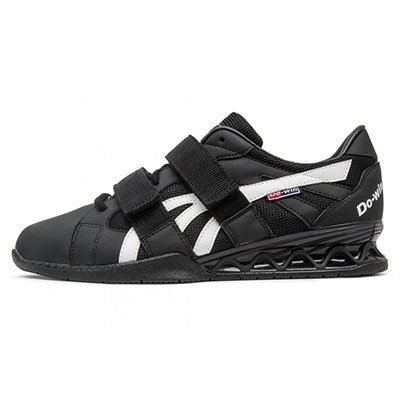
The company used its wide knowledge base and expertise to produce Pendlay Do-Win weightlifting shoes. These weightlifting shoes from the brand look stylish and feel comfortable. This model clearly shows that Pendlay gave a lot of attention to every detail.
Construction
The first shoe in the Pendlay Do-Win Weightlifting shoe series was released a couple of years ago. Most customers believe that these shoes meet all kinds of requirements for a good weightlifting shoe. They also look very stylish and peppy.
Since these shoes have a solid-grain leather exterior, you don't have to worry about durability. These shoes will last for a very long time. The mid-sole has been designed with mesh to offer breathing ability. The heel of the shoes has been manufactured from an enforced wood block.
Although the leather exterior in these shoes is a bit stiffer than suede, it can provide a very stable base. However, you will need to get used to them. Most of the models in this series have taken into consideration people with wide feet. Thus, people with wider feet may feel a bit more relaxed and comfortable. Moreover, people who feel comfortable in regular athletic shoes will also love this model. The heel of the shoe is 0.75 inches. This is the average height recommended for most Olympic lifting.
Quality and Feel
The best part about the Pendlay Do-Win Weightlifting shoes is that they feel very comfortable on your feet. These shoes are a bit wider than other standard weightlifting shoes available in the market. Since the standard heel height is a 3/4th inch, you don't experience any problems while walking. If you have wider feet, these shoes won't feel constricting. You will completely enjoy working out in these shoes.
An additional benefit of the Pendlay Do-Win Weightlifting shoes is that they're very affordable and inexpensive. Since these shoes are also very durable, you don't have to worry about spending a lot of your hard-earned money on shoes frequently.
For men, these shoes are available in two different color options. However, women don't have many choices. They can only buy these shoes in one color. While men can choose between red and black, women can only buy purple. For most customers, this seems limiting and less appealing. While the purple color looks stylish and shiny, some people might consider it to be a bit over-the-top. Most weightlifters don't like such attention.
Despite the flaws mentioned in this post, the pros of Pendlay Do-Win Weightlifting shoes far outweigh the cons. These shoes are very affordable, comfortable, and stylish. Do-Win Weightlifting shoes are a much better choice than standard athletic shoes.
Pros
- A high-quality weighing company has designed these shoes. The company has a wide base of knowledge and experience, and they have continued to improve.
- These shoes can be perfect for people who want to upgrade from standard athletic shoes to a specifically designed weightlifting shoe.
- These shoes are very affordable. Since they're durable, you don't have to spend your money frequently.
- These shoes are very comfortable on wider feet.
Cons
- Many customers don't like that Pendlay Do-Win Weightlifting shoes are available in limited colors.
- These shoes are not very durable for other purposes besides weightlifting. People believe these shoes are not appropriate for running on the treadmill, jogging, and so on.
Adidas Power Lift Weightlifting Shoes Review
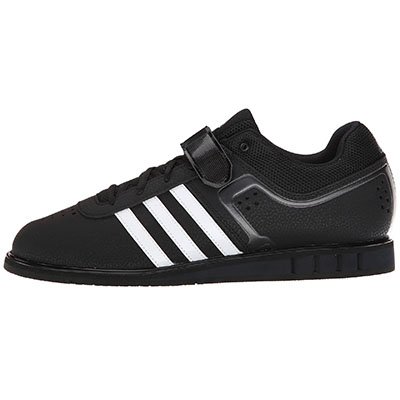
Adidas has specifically designed Adidas Power Lift Trainer shoes for the growing market of athletes and fitness enthusiasts. In recent years, these people have become aware of specific needs for proper shoes during weight training. In this new shoe, Adidas has used a leather upper, comfortable fit and 0.60-inch heel manufactured from EVA. Due to this, these shoes are affordable and allow heavy weightlifting.

In the last few years, Adidas has come up with many different models for weightlifting. The history of these shoes precedes this particular model. Adidas launched Power Perfect II in early 2011. This was a very affordable Olympic lifting shoe. It was specifically designed for non-competitive athletes. Adidas Power Lift Trainer shoes replaced the discontinued range of IronWork 3 and Power Perfect models.
With the Adidas Power Perfect II already available in the market, Adidas needed to design shoes that could easily meet the specific needs of fitness enthusiasts and recreational lifters. In simple terms, it needed to come up with shoes that were durable, affordable, and offers an easy and quick transition from lightweight trainers in the market. This was the main factor that led to the production of Power Lift Trainer shoes. The target market was people who just wanted to hit the gym, but didn't want to spend hundreds of dollars on a pair of shoes.
Construction
Just like the Adidas Power Perfect II, Adidas Power Lift Trainer shoes have also been constructed with synthetic leather. However, to reduce the cost of these shoes further, EVA material has been used to construct the heel of this model. EVA is a very lightweight polymer. It is harder and denser than rubber soles, but lighter. It is worth mentioning that the Power Perfect II is available in just white color with red accents, while the Power Lift Trainer shoes are available in 5 different colors. Due to the use of EVA material, the shoe feels very light.
Moreover, since the heel is only 0.6 inches, these shoes are exact height recommended by some of the best weight training coaches in the world for powerlifting. Most people think that EVA is not super dense like rubber, and therefore, these shoes might begin to compress under heavy pressure. However, many heavy weight lifters have been using these shoes for performing their weight training routines, and they never complain.
Quality and Feel
Indeed, the Adidas Power Lift Trainer shoes are not meant for experienced powerlifters. However, they are perfect for beginner to intermediate level powerlifters. They are also good for people who're just performing presses, squats, benches, or deadlifts. According to some customers, Adidas has once again run a bit tight in the area surrounding the forefoot. Therefore, people with wider feet may experience some problems.
Some people also believe that the forefront of the shoe is a bit stiff. However, once you make a few trips to the gym and get used to them, you won't experience any further problems. Since the sole of these shoes is the same, which were used in IronWork models, the grip is perfect. Overall, the construction and styling of the Adidas Power Lift Trainer shoes seem quite promising. Most of the customers have appreciated and praised the quality and feel of these shoes. These shoes are also durable and easily last a very long time.
The Adidas Power Lift Trainer shoes are currently the best trainers meant for beginner and intermediate level powerlifters in the market. They look stylish and fulfill their purpose in every aspect. Since they come from a reputed brand, you don't have to worry about the quality, feel, construction, or durability of these shoes.
When it comes to buying these shoes, you can easily purchase them online at an affordable price. However, before making a purchase, it is important to choose a reputed seller. Many retailers offer free shipping and other lucrative discounts. Just make sure you buy authentic products from a verified seller.
Pros
- These shoes have a perfect grip because of the "sticky" gripping soles.
- They fit like sneakers and provide more comfort.
- Adidas has given a lot of attention to detail.
Cons
- They can feel a bit uncomfortable for wider feet.
- The heel feels quite lightweight.
- Shoelaces are very long.
Nike Romaleos 3 Men's Weightlifting Shoes Review
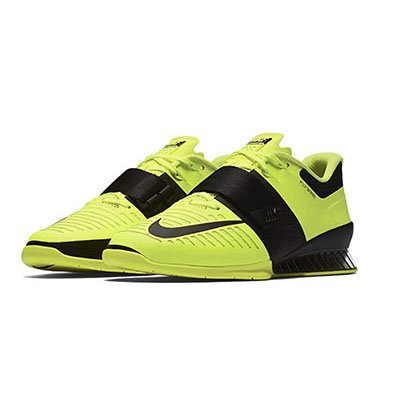
This shoe is a solid and stable workhorse that, at first glance, looks more akin to a stylish and sporty trainer than a weight lifting specific shoe. Yet this is a shoe where form and function merge, creating comfort, performance, and stylish looks.

The Romaleos weigh 25% less than the original design, and has a reworked forefoot, giving a substantial increase to forefoot flexibility. This translates into more lift and drive, due to the lighter weight, making it easier to whip the shoe around and dive under the bar. The added flexibility also gives the show added stability and feel in the receiving position of the jerk.
At the heart of the Romaleos 3 is a revolutionary quarter inch heel power bridge that uses a honeycomb system of trusses and bridges. This has been engineered to create a lightweight and innovative alternative to the ancient wooden shim. The upper body of the shoe is constructed from ultra-supportive, durable synthetic materials. Opposing Velcro straps give you even pressure over the mid-foot.
Construction, Quality, and Feel
The Romaleos 3 have a wider than standard mid footbed, making them ideal for people with wider than average feet. The lifting shoe allows you to stabilize more readily as a result of the TPU heel technology without adding bulky weight to the shoe. A honeycomb system of trusses and bridges have been engineered to provide a lightweight and innovative alternative to the ancient wooden shim.
The TPU heel is designed to bear as much weight as the lifter can handle without experiencing any kind of compression at all. The power bridge is a contoured TPU heel wedge designed to cup and hug the heel in place, providing an even greater level of stability during lifting.
The Romaleos is unbelievably solid, and the shoe has no spring whatsoever. This means that any force that you are putting through your legs to push up doesn't get absorbed by cushioning.
There are no shocks or air bubbles. The sole of the Romaleos 3 is extremely grippy. Double Velcro straps and solid lace-ups allow for mid foot rigidity. Despite the men's lifting shoe's strength, the toe offers a good level of flexibility. However, there is no flexion in the heel, which is what you want for heavy Olympic lifting, making it one of the best shoes for weightlifting available.
Elastic has been added to the top of the Nike Romaleo 3 to allow the shoe to flex with the tendons of the foot during the movement of lifting. The flat rubber outsole is specially designed to minimize heel wear. The Nike Romaleo 3 weighs in at 15.8 ounces.
Pros and Cons
In comparison to the first Romaleos, the Romaleos 3 has enhanced toe flexibility. The revamped shoe is also lighter than the first one. It weighs 25% less than it's predecessor. A lot of the lighter weight has to do with the TPU Heel technology. This shoe provides a great deal of lateral foot stability.
Once you set your foot position at the start of your set, it will stay there throughout. It will feel as if your feet are screwed into the floor.
The upper of the shoe is completely synthetic but is very durable. The shoe will last for a very long time, making the higher than the average price tag you pay well worth it in the long term.
Despite the lack of cushioning, the Romaleos 3 is still very comfortable. Users will find there is less pressure on the ball of the foot than with a regular, flat shoe.
Nike's ability to keep this good weightlifting shoe extremely stable while still providing for comfort and cushioning is truly impressive.
The three-quarter-inch raised the heel of the Nike Romaleos 3 allows you to put more emphasis on your quads when you are squatting. You will also be able to go deeper on both regular and hack squats. Due to the added flexibility, you will also be able to experience greater stability and feel in the receiving position of the jerk.
The double Velcro strap securely locks your foot in place, preventing any side roll. The shoe also features a nice heel cup, preventing heel roll. The shoe looks attractive and comes in a range of cool colors. It is a top of the range weight lifting shoe, so expect to pay top dollar. But, with this one, the adage about getting what you pay for certainly applies.
Some buyers have found that, when they have ordered their normal shoe size, the Nike Romaleos 3 has been too big for them. For that reason, it is a good idea to order your shoes a half size smaller than your regular shoe size.
Inov-8 Fastlift 335 Weightlifting Shoes Review
The Inov-8 Fastlift 335 has addressed a major problem within the world of weightlifting shoes; how to provide the sturdiness needed for Oly lifting while also catering for Plyo type work without having to go to the hassle of changing your shoes. The Fastlift bridges the gap between the dedicated weight lifting shoe and the functional fitness shoe.
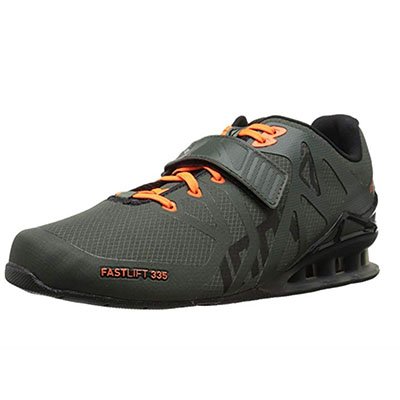
The heel of the Inov-8 Fastlift features a patented power truss. This feature a series of string cylindrical columns designed to support the heel with an optimum heel lift for effective lifting and power transfer. The trusses drastically reduce the overall weight of the shoe. Just below the power trusses lies the external heel cage (EHC). This acts to lock the heel in place, providing lateral stability for the heel through all movements.
The sole of this shoe has been designed from rock climbing rubber technology. The effect is a sole that optimizes grip on a range of surfaces. Circular cutouts in the sole create a series of suction cups that glue you to the floor during your lifts. Read more in our full review.
Although it's sold weight lifting features, the shoe fits and feels more like a training shoe than a weightlifting shoe, this allows for full range and freedom of movement while still being able to provide max stability for the traditional lifts.
Features of the Inov-8 Men's Fastlift 335
The majority of oly shoes can be quite heavy and cumbersome to use for anything other than squats. In many cross-fit situations, you have to choose whether to jeopardize the correct jumping technique and wear weight lifting shoes or wear running trainers and not get the most out of your squats and deadlifts.
The Inov8 Fastlift has bridged the gap between a traditional weight lifting shoe and a running shoe. The secret to this hybrid shoe is the patented Powertruss technology.
By strategically placing several hollow thermoplastic polyurethane (TPU) columns through the heel section, it can deliver a stable weight-bearing load of over 1200 pounds. At 335 grams, the shoe is amazingly lightweight for the support that it provides.
Many users have noticed enhanced stability from the heel up into the core with the Inov-8. The design helps guide the knees into a stable tracking position during squats and minimizes leg buckling.
The Inov-8 335 is the lightest shoe of it's kind at 335 grams. Being originally designed for Cross Fit, the shoe has a flexible toe box. Although this will allow you to run and jump, the lack of heel compression also provides the rigidity and peace of mind needed for heavy Oly lifting.
The standard heel height for Olympic weightlifting shoes is 0.75 inches. With the Inov-8 335, it is only 0.65 inches. This still gives you all of the benefits of having an elevated heel while allowing you to move straight into plyometric type training once the heavy lifting is down. The heel lift is made from cylindrical tubes that form the basis of Inov-8's patented Powertruss system.
This provides an impressively powerful base while keeping weight to a minimum. Many users report that they can go deeper into their squat when wearing their Inov-8 335's than when using competitor brands.
Inov-8's unique metal flex groove across the forefront of the outsole allows for the ultimate combination of toe box flexibility and mid shoe rigidity. When you squat or do your heavy overhead lifts, this shoe will make you feel as if you are strapped to the floor.
Inov-8 Women's Fastlift 335 Cross-Training Features
The Inov8 Women's 335 is a stylish shoe that is built for looks and functionality. It is constructed of lightweight synthetic uppers. As the name implies, it is an incredibly lightweight shoe, coming in at just 335 grams. The women's range offers a lot of color options, with the most popular being the pink monochromatic design.
The Inov8 335 offers a surprisingly comfortable fit. This is largely due to the advanced heel technology. The external heel cage cups your foot.
Made of TPU, it connects to the power truss columns providing maximum stability with minimum weight. This provides even more lateral stability while, at the same time, allowing for more user comfort. The Inov-8 335 even features a nylon rip-stop upper specifically designed for more support when doing rope climbs.
The material quality of the Women's Inov-8 335 is high. The sole features an enhanced grip, something for which Inov-8 is well known. The Fastlift features a unique outsole that makes use of suction cup technology to maximize the floor grip. The inverse checker plate allows for maximum leading edges for ground contact.
The Women's Inov-8 335 is a true hybrid cross trainer shoe that allows for serious heavy lifting while also providing the flexibility needed for plyometric movements. Even though it is possible to run in the 335, you wouldn't want to do so for an extended period. But, for the trainer who wants to move rapidly between heavyweight and jump, sprint, or bodyweight exercises, the Inov-8 335 may well prove to be the lightest, most durable, and most flexible shoe that they will find.
The Fastlift 315 is another alternative if you want to stay in the Inov-8 family and is our pick for one of the top 2 best women's weightlifting shoes.
Reebok Crossfit Lifter Plus Review
The Reebok Crossfit Lifter comes with two straps for superior foot rigidity. There are a forefoot strap and another one around the ankle. The toe material is leather with a reinforced plastic coating on the side of the shoe. Combined with nylon and rayon, this makes the shoe almost indestructible. Despite this, it is very lightweight. On the inner heel, this shoe features an anti-microbial infusion into the sidelining.
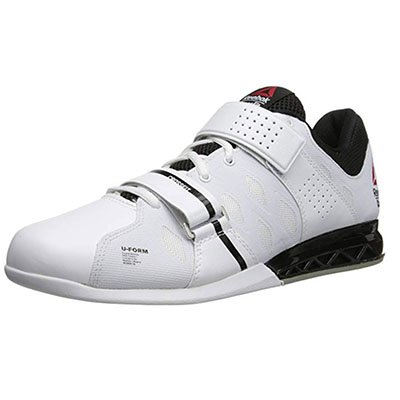
The CrossFit Lifter Plus is a Form shoe. That means you can put the shoe inside your oven, then put it on, and it will mold to your foot. Full instructions on how to do this are included with the shoe. This will provide stability when doing your Oly lifts so that the foot is not moving while powering the weight into position. This makes the Reebok CrossFit Plus a serious weight lifting shoe which also caters to the needs of the cross-training athlete.
Reebok CrossFit Lifter Plus for Men Features
The Reebok Crossfit Lifter Plus features a double strap for greater foot security. It has a forefoot strap as well as one for the ankle. This provides for more stability when you're hitting your Oly lifts.
The side material of the Lifter Plus is constructed of a reinforced plastic, which, when coupled with the full-grain leather toe, allows for an extremely lightweight shoe that is virtually indestructible.
The Powerbax heel of the Reebok Crossfit Lifter Plus provides a power truss design very similar to the Nike Romaleos. The heel lift on the Lifter Plus is not as pronounced as a dedicated weight lifting shoe. It still allows you to align yourself for correct squat performance, but will also give you the horizontal stability needed for deadlifting and performing plyometric moves.
The Reebok Lifter Plus features U-Form technology. U-form technology means you can place your new shoes into the oven to be preheated, then remove, put the new shoes on to your feet and do up the laces and straps-flex in the new shoes before removing and allowing to cool before using them fully. This will perfectly mold the shoe to your foot shape.
The inner lining of the Lifter Plus features an anti-microbial infusion process that eliminates odor while keeping your feet safe from germs.
The Lifter Plus tends more towards a pure Oly lifting shoe than the Reebok Crossfit Lifter. That being said, it will still allow for other Crossfit moves. It is, therefore, more sturdy and generally feels to be of better construction.
Reebok Crossfit Lifter Plus Women's Shoe Features
The Reebok Crossfit Lifter Plus Women's shoe is a more dedicated plyometric movement shoe than the Lifter Plus.
As a result, it is more of a hybrid, offering lighter weight, more flexibility in the forefoot, and less rigidity in the mid shoe. This makes it a great option for the likes of rope climbs, box jumps, and even running (just don't plan on doing a marathon in them).
The Reebok Crossfit Lifter has a synthetic exterior with a single crossover strap that locks at the midfoot rather than the top of your foot. As with the Lifter Plus, the Reebok Lifter comes with U-form technology, allowing you to cook the shoe to mold to your foot perfectly.
The outsole features flex grooved rubber for superior traction on multi-surface terrain. The patented PEBAX TPU clip on the heel of the shoe dramatically reduces the weight of the shoe.
The heel of the Crossfit Lifter Plus for women is not as pronounced as you'd see in a dedicated lifting shoe. Nor is it a stable pressing surface. Rather, it provides a good amount of cushion and compresses when you lift. This does reduce the shoe's usefulness during squats and Olympic lifts. Reebok likes to refer to this as 'spring.' However, it does reduce the shoe's usefulness for Oly lifting.
These shoes fit true to size. They are very comfortable and surprisingly breathable and lightweight. It comes in a range of color options, including black, white, orange, grey, and pink.
Reebok's goal with the Lifter Plus was to produce a more versatile lifting shoe for women. With the exception of the Oly lifts, they have achieved this. It's great for deadlifts, bench presses, and the like and will allow you to transition directly into running and jumping exercises.
However, there is just no getting away from the fact that powerlifting requires heel rigidity and, in this, the Reebok Crossfit Lifter Plus for Women is compromised.
Last Updated: 21st Jan, 2025

Tumay Kilinc
Co-founder of Reviews By People. I'm here to make your buying decisions easier and save you time. If you have any questions, feel free to comment below.
Comments
Leave the first comment