
Introduction
Long before Neil Armstrong was bouncing along in the moon’s lower gravity, people were enamored with the idea of being able to walk with a bit of a bounce. It was Nickelodeon who first introduced Moon Bounce Shoes in the 1950s. These shoes were promoted to the public as “mini trampolines for your feet”.
Then, in the 1990s, a Swiss entrepreneur named Denis Naville redesigned jump boots. He did this because he wanted to improve their performance, design, and especially the comfort level of the user. The best jumping boots of today are the result of his work.
The bottom of these shoes have springs and a metal frame that fits over the wearer's regular shoes.
These low impact rebound sport shoes provide many great health benefits and are a safe low impact way for people of any age to exercise. Users have claimed that they are so enjoyable, that they didn’t feel like they were working out at all! The shoes are safe, enjoyable, and extremely easy to learn.
Unlike other exercises, they provide protection to your joints, hips, ankles, knees, lower back, and spinal column.
Brands
Best Jumping Shoes Reviews
Kangoo Jumps XR3 Jumping Shoes Review

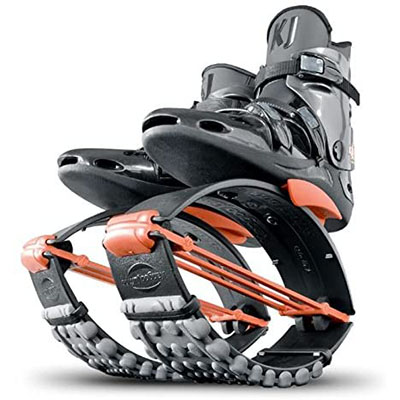
These shoes come with stylish pink accents, so it may be a fashionable choice for a fitness-minded woman.
Kangoo pride themselves on being an industry leader, and as such, build shoes with functions built into the boots. You can add coil springs, or modify the t-springs of the boots, which will change how you jump and rebound.
This can open up a whole new world of movements, meaning the shoes can be adjusted to fit your individual needs. You can adapt them after purchase, meaning that you are not stuck with how they are set out of the box.
The best feature of this invention is the way that it allows you to exercise, even if you have joint problems. The way that it does this is by reducing the shock on your joints up to 80%. Kangoo boots are the best option for those individuals who are seeking to lose weight.
By regularly using jumping boots, the wearer can expect to burn up to 2x the calories of normal exercise at and expedient rate. The boot works for either gender, as it has been proven to improve overall strength in the lower abs and legs in both males and females.
Kangoo Jumps XR3 Special Edition Jumping Shoes Review
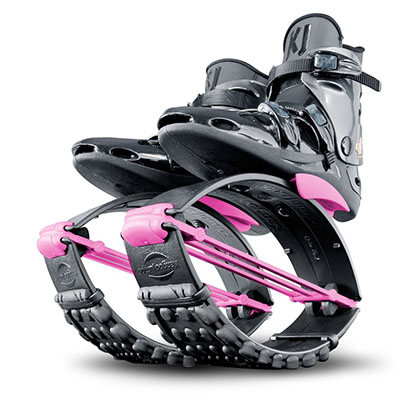
The thickness of the shell is what sets this pair apart from the XR3.
This shoe type has a slightly harder shell. This can be both a curse and a blessing. While the shoe is more durable because of the harder shell, it is also much heavier. This might make these boots ill-suited for some users.
If you are a person that has run with weights on your ankles previously, you probably won’t feel too much of a difference between these shoes and other more lightweight models.
These boots also feature a black design. This adds a perk that might not be obvious at first. They will look newer longer, as any dirt or cosmetic damage will blend in better than on a lighter colored model.
The shoes do weigh a bit more than other versions, about 5 pounds. This may take some time to get used to. However, once you have gotten used to them, you’ll start to see an appreciable difference in the strength of your lower leg muscles. This, of course, will help you in future athletic endeavors.
These are excellent jumping shoes, and they will help you to tone your calves. They will also provide you with long term benefits to your joints.
Geospace Air Kicks Anti-Gravity Running Boots Review

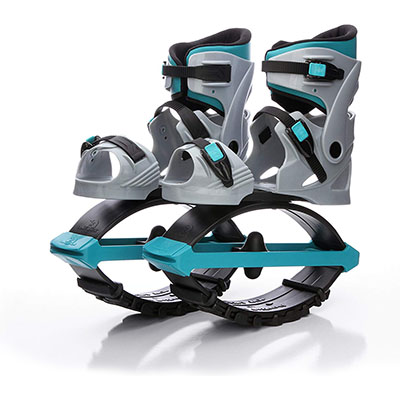
The Air Kicks have a patented jumping mechanism. They refer to it as Jumping Jax T-Spring Technology. This unique design may make them worth checking out.
The t-shaped mechanism in the middle is designed to regulate rebound. This is different than most jumping shoes. They also have bands around the outer portion of the jump pad.
The best part of this pair of jumping shoes is that you can customize them based upon your weight requirements. If you gain or lose weight, let someone borrow them, or they begin to wear out you can order a replacement t-spring individually, instead of a whole spring system.
This also saves you money because it makes it so you don’t need to buy a whole new shell either.
If you are only seeking occasional recreational jumping shoes then these will probably fit the bill for you. However, if you intend to use them often, you will most likely have to replace them earlier than others on this list.
G-max Jumping Shoes Boots Review

This model is meant to be used over properly fitted athletic wear, as it is a jump boot.
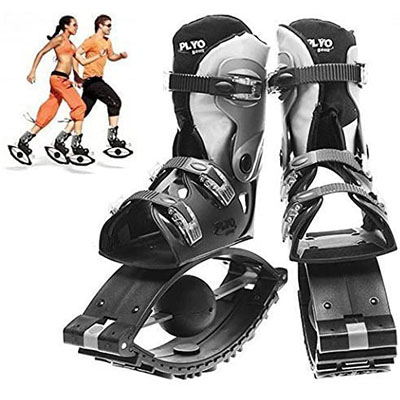
These boots have a shock-absorbing ball inside, which is unique to this model. The idea behind this ball is to reduce the impact of the exercise on the user.
G-Max Jumping Shoes are great for someone with chronic back or joint pain. They also offer reflective fabric on the back so that they can be used safely at night time.
The biggest concern that reviewers had was that the boots might pinch a little if they are adjusted improperly. A custom-fit can be achieved, however, whether you use the tool provided by the manufacturer or a simple coin.
After this small problem was taken care of, the reviewers were amazed at the pain-relieving benefits of the shoes.
The Benefits of Jumping Shoes
The benefits of these shoes have been proven over a 40-year span of research. This research has shown that these shoes have the ability to strengthen every cell, organ, and muscle in the body. They also have proven to provide fast weight loss through stimulation of the lymphatic system. Their use can prevent and cure some diseases, and they have shown to reverse or slow the aging process!
After a cursory glance, one might assume that these shoes are just for recreation. However, if you look at them a bit more closely, you’ll find that most users purchase them for medical reasons.
As odd as it may seem, people with chronic back and leg pain find that the shoes can help rid them of some of the tension in their joints.
This makes them ideal for those individuals with chronic pain in their back and joints to wear them while they exercise, as it alleviates the pain of moving around.
Athletes, specifically those involved in sports with lots of running and jumping, find them useful because they activate muscles in new and useful ways. This ends up giving the athletes more strength in their legs and core, which improves their performance in their sport.
These shoes can offer a slight boost for intensity training as well. Once the body is used to wearing the shoes, the muscles and stamina have been strengthened to the point where users will see benefits while they are not wearing the shoes.
How to Use a Jumping Shoe
The design of the shoes is such that the goal is to redistribute your weight in such a way that will work along with your natural sense of balance.
These shoes will not throw you off balance completely by removing your center of gravity. Rather, they will narrow it down into a smaller area. If you are someone who has a good sense of balance, and you are good at riding a bike or skating, the shoes should be a good fit for you.
Finding your center of gravity in the jumping shoes is a bit of a balancing act, unlike when you just put on a regular sneaker.
You should slowly build up the intensity of your workout. Wait until you have developed a feel for the way the shoes change your center of gravity and redistribute your weight.
Again, be sure to start slow. Like the old adage affirms, slow and steady wins the race. Take the time to get used to and master the way the jumping shoes feel to assure that you can use them in a safe manner.
Conclusion
There can be a risk of injury with these bounce shoes, but no more than any other sport or activity. Just make sure that you follow some common-sense guidelines so that you can have the same safe experience as most users.
Wear protective gear and always stay on flat, even, stable, and dry ground for your safety.
Make sure you get the shoes that are right for your weight. There are jump shoes for kids and jump shoes for adults. Having a pair that is not right for your weight could make your experience unsafe.
Choose your shoes based on how you want to use them. If you are using them for fun or for exercise, there are different mechanisms that you may need to adjust.
Before purchase, make sure that you read the specifications so that you are buying the pair of jump shoes that are right for you. Proper maintenance and care is essential so that the boots remain safe for a long time.
If you’re wondering, what is the best jumping shoes? The answer is – Kangoo Jumps XR3! This is the best-selling jumping boots which open up a whole new world of movements.
Last Updated: 21st Jan, 2025

Tumay Kilinc
Co-founder of Reviews By People. I'm here to make your buying decisions easier and save you time. If you have any questions, feel free to comment below.
Comments
Leave the first comment