
Introduction
A reciprocating saw is a powerful machine, the usage of which is aimed at creating coarse cuts in materials used in buildings and for obliteration. The amount of power sent to the blade makes it capable of cutting hard materials such as metals, fiber glass, masonry, wood and plaster. For people indulged in activities like construction, plumbing, HVAC, electrical jobs, etc. a reciprocating saw is a must have equipment. However, the selection of a reciprocating saw depends on factors such as weight and size of the saw, accessibility, convenience, power supply to the motor, etc.
Buying Guide
There are some important characteristics of a best reciprocating saw that one must know while making a purchase. Considering the characteristics will definitely help in making the right choice.
Corded vs. Cordless
Corded reciprocating saws have a cord attached to it which when connected to the power socket gives power to the blade up to 15 amps. These are best suited when continuous maximum power is required. However, limited cord length and the all-time availability of power generator or outlet are its major drawbacks.
Cordless saws on other hand do not require a power outlet and is not limited by any kind of cord and hence expanding the area of operation. These are not as powerful as corded saws and therefore are suitable for sawing lighter materials.
Shoe adjustment
Shoe adjustment renders a better control over the saw and help in creating fine cuts by stabilizing the saw during its operation and eliminating any kind of unwanted movement.
Orbital maneuverability
Orbital maneuverability makes the saw work in both horizontal and vertical directions, plus it supplies a uniform cutting speed.
Tool less blade replacement
As the name suggests, tool-less blade replacement does not require any tool for changing the saw’s blade making the whole process more commodious, easy and time saving.
Variable speed
Different materials require different and appropriate speed for being cut with accuracy. Not only will it give you a better control while operating the saw but also aid you in sawing the material with convenience and precision.
Auto stop brushes
This feature of the reciprocating saw is a self-executing process that aims at unmanned mechanical halting of the saw in cases when the brushes abrade because of friction and hence safeguarding the motor from any kind of damage.
Metal gear housing
The metal gear housing is an additional protective feature focused on preventing the motor of the saw from sweltering or burning because of extreme and heavy duty usage. This feature aims at providing protection to the motor and durability to the whole saw.
Speed regulation
Speed regulation system maintains and manages the speed of the saw. It ensures that the cutting speed does not decrease during its operation and even if it tends to happen, this feature will regulate and tune the mechanism to provide uniform speed.
Storage case
A storage case is inevitable when you own a reciprocating saw in order to ensure safety and protection against any possible damage or injury. A storage case that comes along with the saw not only safely accommodates the saw but also stores any kind of accessories that the operator may require on the work site.
How to Use a Reciprocating Saw?
There is no point in owning a reciprocating saw until and unless you know how to use it. One needs to understand certain techniques before using the saw in the right manner.
The best blade for the best job
Different kind of blades are required to cut different kind of materials depending on the hardness of the material and the type of cut required.
- Coarse blades: Appropriate for cutting wood, plaster, ceiling boards, etc.
- Fine blade: Suitable for cutting metals.
- Toothless tungsten carbide-coated blade: Perfect choice for cutting ceramic tiles, stones, cast iron, etc.
Grabbing style and focus
Holding the saw in the right way ensures better control and efficiency of operation. One must grab the saw with both hands with one hand grabbing the handle and the other placed somewhere near the front.
Applying the right pressure
The amount of pressure applied on the cutting material should be adequate and balanced. It should neither be too high or too low. Using an old board for finding the right pressure is always recommended.
Start point and end point of cutting
The starting and finishing point both are important while cutting the material. For instance, if you are to saw plastic or metal pipes, it is necessary to make a small cut by carefully placing the blade at the position where you want to cut and then increasing the pace gradually. If you want to saw through a ceiling, closed doors, wooden doors, etc. it is recommended that you initiate the process by initially cutting a hole and then move ahead for sawing. The ending of the cut should always be done precisely and smoothly.
Movement of the body
Down and up motion is advised while sawing the material. However it should be taken care of that too much motion will leave you with uneven and coarse cuts. To ensure that your saw stays stable, place it on the working surface.
Best Reciprocating Saws
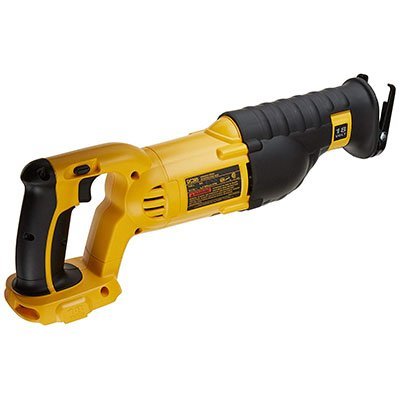
DEWALT Bare-Tool DC385B 18-Volt Cordless Reciprocating Saw Review

Features and Specifications
The DEWALT bare-tool DC385B is a cordless saw which runs on 18-volt batteries and is capable enough to perform efficiently the heavy duty jobs. The cutting pace provided by this model is very fast, nearly 2900 strokes per minute. Also, the length of the stroke is around 1 inch which also facilitates in fast sawing.
This model is equipped with an electric brake which acts as a protective feature that safeguards the blade from getting damaged. The anti-slip comfort grip provides the operator with a firm and comfortable grip over the saw. It has also got a 4-position keyless blade clamp which supports convenient and quick blade replacement.
Pros and Cons
This saw though runs on batteries but it is a very powerful machine. It also has a very good balance which is the result of the open top adjustable shoe. Also, it does not weigh too much and hence is convenient to work with. The motor installed in the saw has variable speed setting which can be customized accordingly. The quick and convenient blade replacement is big thumbs up. However, this saw doesn’t have orbital cutting and adjustable stroke length. This model does not come with batteries so you’ll need to buy them separately.
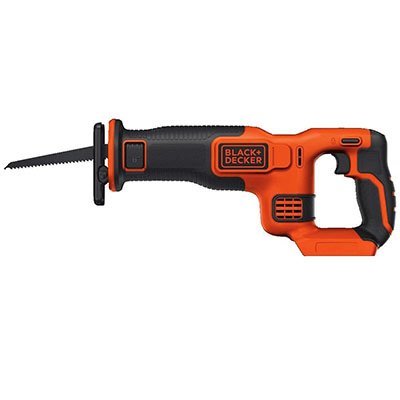
BLACK+DECKER BDCR20B 20V Max Lithium Bare Reciprocating Saw Review
Features and Specifications
This Black and Decker saw is a cordless model which works on 20-volt batteries. It has the option of variable speed setting which can be customized. The maximum SPM provided by the saw is 3000 and the stroke length is 7/8 inch. It supports blade replacement without the use of tools which is an absolute boon and it also has a pivoting shoe to ensure stability.
Pros and Cons
This cordless saw is light in weight, it is powerful and it has great speed. It can cut almost everything you put through it. The speed setting option lets you adjust the speed of the blade in accordance with the material to be cut and type of cut to be made. Also, the tool-less blade replacement is such a relief. This model however, vibrates a lot which can prove to be a bit uncomfortable.
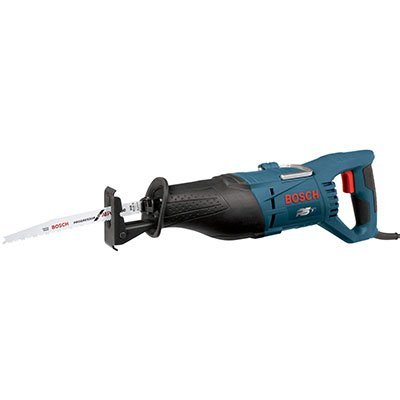
Bosch RS7 1-1/8-Inch 11 Amp Reciprocating Saw Review

Features and Specifications
The Bosch RS7 is a powerful corded saw having an 11 Amp motor which provides stroke length of 1-1/8 inch. It has a dual LED lighting system which helps to light up the cutting area. The blade of this reciprocating saw can be easily changed because it has tool-less blade replacement system. It also has customizable speed setting and a very soft and comfortable saw handle.
Pros and Cons
Bosch RS7 is a very strong saw capable of performing effectively all the heavy duty tasks. It can cut plywood, cement board, metal and dimensional lumber with absolute ease. The dual LED feature brightens up the cutting area which helps the user in having a better vision while sawing. Its ergonomic handle is very soft and comfortable which extends the normal time usage of the saw. Its tool-less blade replacement on one hand is a good feature while the small tiny lever that releases the blade can sometimes become a headache. It comes with a carrying or tool-storage case which is made of cloth, this is a big thumbs down! It is powerful but at the same time it is very heavy and has no vibration control feature.
Ingersoll Rand 329 Heavy Duty Air Reciprocating Saw Review
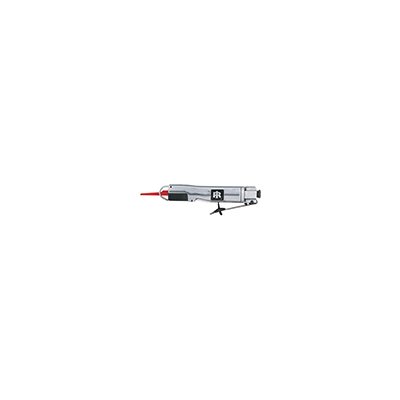
The Ingersoll Rand 329 is a pneumatic saw that can easily cut intricate shapes, as well as light radius curves in various materials, such as all sorts of plastic, composite materials, fiberglass, aluminum, and sheet metal. This makes it great for muffler and exhaust work, body shop repair, and sunroof installations. It has an adjustable blade guide and a positive blade retainer.
It makes 10.000 3/8-inch strokes per minute while consuming 8 CFM of air on average. It has an inline configuration, meaning it can easily access most tight spaces. Also, with this reciprocating saw, you’ll get six cutting blades and two hex wrenches.
Pros and Cons
Thanks to the inline configurations, most tough jobs aren’t as tough with this saw. It’s great for both flat and curved surfaces, so you’ll rarely have to reach out for another saw when you have this one. It’s robust and durable, so most surfaces will no longer be an issue. Also, it comes with additional cutting blades. It’ll take a while before you reach for a spare one. The biggest problem with this saw is that it can vibrate a lot while cutting, so you’ll have to pay close attention if you’re making precise cuts.
SKILSAW Buzzkill SPT44A-00 13 AMP Reciprocating Saw Review
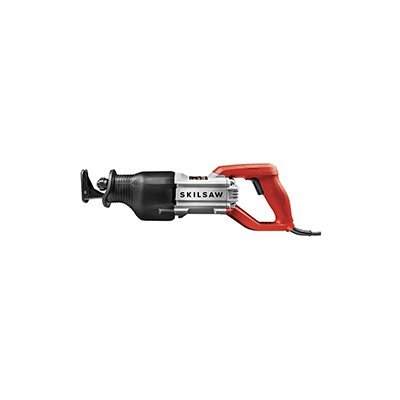
The SKILSAW Buzzkill uses a full-frame counterbalance system that makes it stand out from other, seemingly similar products. Its elongated design helps reduce vibrations by around 35% than comparable models. The design also means there are fewer wear points. This extends the life of the saw, making it durable and long-lasting.
It also includes a few more modern technologies that bring many advantages. One of them is a single wobble drivetrain, designed for friction reduction. It also slows down the heat buildup, but the saw still can get pretty warm after some time, especially close to the forward grip. The saw also features a constant spring, optimizing motor performance and cut’s durability.
Pros and Cons
The first thing that can be noticed is how little this saw vibrates. While it isn’t possible to make an exact measurement of the vibrations, it is easy to see how this model feels much more comfortable in hands than most other reciprocating saws. It is also much durable than most similarly priced models. However, other than that, this saw is lacking some important features that most saws have, such as a rafter hook, variable speed dial, orbital action, rubber overmold, and adjustable shoe.
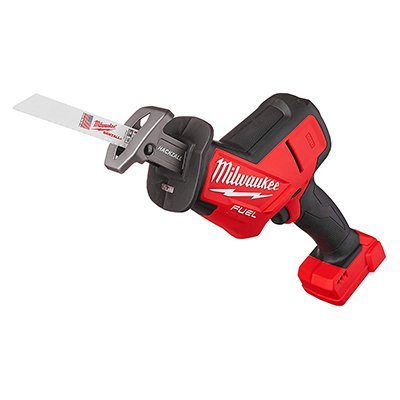
Milwaukee 2719-20 M18 FUEL Hackzall Review

Milwaukee M18 is one of the two famous Milwaukee Fuel Hackzall models, the other being M12. Hackzalls are not tools for everyday use due to their aggressive and rough way of work that can wear you out in no time if you’re not used to them. Luckily, M18 is a bit smaller than most hackzalls, offering at least some relief to your hands.
This model uses Milwaukee’s PowerState brushless motor, something that always made the brand’s saws stand out. It has one-hand reciprocating saws, as well as good handle ergonomics. Compared to most hackzalls, it has a rather comfortable grip. The motor has a 7/8 inches stroke length, as well as a 3000 SPM rate.
Pros and Cons
This saw is cordless, which is an essential feature for many. It also has good handle ergonomics, and it is reasonably lightweight, especially considering that it’s a hackzall. You will be able to hold it comfortably with just one hand. Sadly, the model’s smaller size also means losing some of its power, something that hackzalls are famous for. Still, it is a godsend for most lighter demo work, as well as electricians, plumbers, and HVAC professionals.
Conclusion
For people engaged in construction jobs, a reciprocating saw is inevitable. The market offers you with a wide range of reciprocating saws that have varying qualities and features. Depending on what kind of profession you are indulged in, what materials you usually have to cut, what features you want, what budget you have and certain other facets; by following this buying guide, you can buy your very own saw that is good enough to cater to all your needs and requirements.
Last Updated: 21st Jan, 2025

Tumay Kilinc
Co-founder of Reviews By People. I'm here to make your buying decisions easier and save you time. If you have any questions, feel free to comment below.
Comments
Leave the first comment