
Introduction
Believe it or not, it’s been 100 years since the first pogo stick was introduced to children, and adults, of the world. Originally made from wood, modern-day pogo stick for kids has come a long way and use all the latest materials to produce lightweight and strong toys.
Indeed, it could be argued that the modest pogo stick has become part of the modern psyche, it certainly seems like a timeless toy that shows no sign of stopping.
The use of modern and strong materials doesn’t mean that you shouldn’t consider the weight of the person using it.
The last thing you need is to buy a pogo stick that can’t handle the load jumping up and down on it so a little thought in this area before buying goes a long way.
When considering a pogo stick for kids you might want to introduce them to pogo toys gently and build up their confidence over a period of time on safer versions of the toy. Examples of these might be something like a Space Moon Hopper which provides the same sensation but less height and therefore less chance of injury to little ones.
Another version might be the Zoingo Boingo which is similar to the hopper but has a handle similar to actual pogo sticks. if you want something a little closer to the real thing then Geospace Jumparoo gives you the full pogo stick experience but with the added safety protection of oval rings at the base instead of just a pole.
The bottom line with all these alternatives is that base is wider and the height jumped lower than a pogo stick and therefore are great as a stepping stone towards the real deal.
Brands
Best Flybar Pogo Stick for Kids Reviews
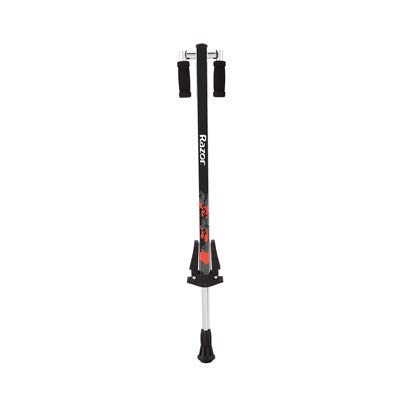
Razor Gogo Pogo Stick Review

A prominent manufacturer in the area of sports equipment, Razor is renowned for its innovative approach and style which are obviously evident in the Razor Gogo Pogo Stick. It’s aluminum lightweight frame and collapsible design makes it perfect for taking anywhere with you or even letting the kids take it to a friend’s house.
Indeed, if your child, or the child in you, is always on the go and moving around then this is a perfect choice and before you know it you’ll be bouncing all over the place.
Although the product manufacturer says it is designed for kids above 6 years old, we find it unsafe to use for any kids below 8 years old.
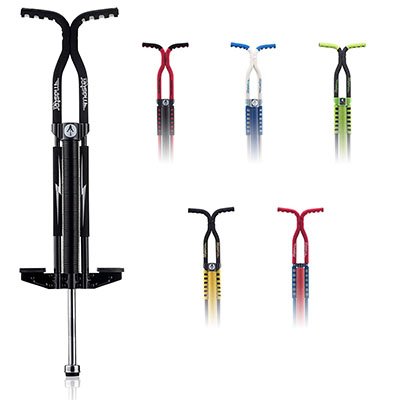
Flybar Foam Master Pogo Stick For Kids Boys & Girls Ages 9 & Up, 80 to 160 Lbs Review

Marketed as “The Original Pogo Stick Company” and “the standard by which all pogo sticks are measured” it’s easy to see why this brand is so popular. To begin with they know their stuff as they’ve been around making pogo sticks since 1918 and it shows in the sheer abundance of high-quality materials, design, and features of their products.
Firstly, the stick and grips are covered in foam to give better comfort as well as protecting both the user and the stick itself. Safety is paramount too as it employs a wider tip for more stability, consistency in bounce and non-slip foot pegs to allow for a better grip when attempting those dangerous tricks. Due to it’s more professional nature, the Flybar Pogo Master pogo stick is aimed at children of 9 years old and above and can handle weights of between 80 and 160 pounds.
Grow-to-Pro 3-in-1 Pogo Stick
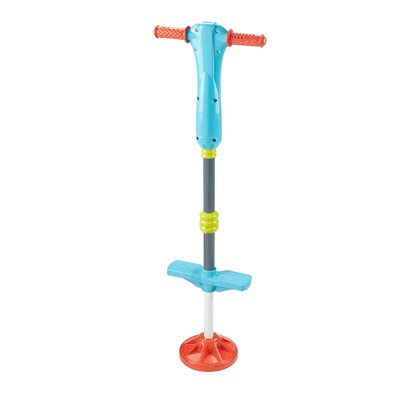
The Grow to Pro 3-in-1 is a great in-between stick for kids of five years and above that helps a child to learn through employing various safety features.
The smaller hands of youngsters will find it easy to grip these custom-made grips and the extra wide skid-resistant foot pedals allow a secure footing as well as increasing the child’s confidence with the stick. This item also comes with two interchangeable foot bases so children can progress to a more advanced level without having to pay for a better stick. A bonus for you parents out there who want their child to be athletic but affordable at the same time I’m sure.
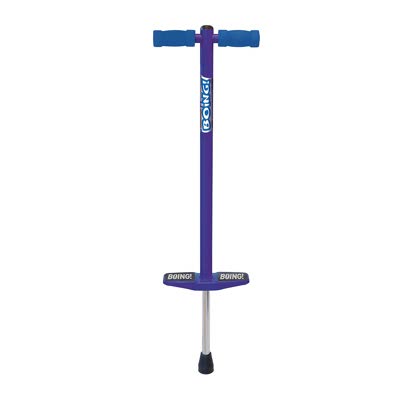
GeoSpace Jumparoo Boing Pogo Stick Review

Aim towards children of six and above with a weight of between 50 and 90 pounds, the GeoSpace Jumparoo from manufacturer Air Kicks is not as jam-packed with as many safety features as its counterparts and targets more confident jumpers as the rubber T-springs which this stick employs can give a height of 2 feet.
Foam padded grips and a lightweight frame make it a comfortable ride for children who have some experience and confidence with riding bikes and similar physical activities. One of the best features here, for parents at least, is the non-marring base which will not leave your house looking like it was attacked by a race of one footed maniacs. Better still it comes in three different sizes that accommodate everyone from four-year-olds to fully grown adults.
Flybar Foam Maverick Pogo Stick Review
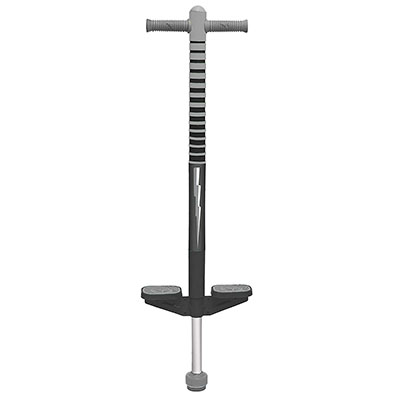
The Foam Maverick is similar to the Foam Master, except it is suited for younger children typically under the age of nine. Once again, as seen in the Foam Master, it has a covering of foam surrounding a metal frame to protect the user from the bruises and sores associated with a metal pogo stick. The Foam Maverick also has amazing durability, as seen in many of Flybar's models. It can last for two to three years easily, before the spring wears down. Also, the rubber tip problem found in the Foam Master is much less prominent, although there have been some cases of the rubber tip coming off.
Everything found in the Foam Maverick is designed for smaller and younger children. If you are over ten years old, and if you weigh over 100 pounds, this stick is not for you. Consider purchasing the Foam Master. However, if you meet these criteria, the Foam Maverick is perfect for you. Its light weight makes it easy for children to handle, and the wide rubber base assures that slipping is nearly impossible (remember, the tip could fall off, so be sure to check every once in a while). The Foam Maverick also has wide footpads and extra-grip handles, to decrease the chances of a crash for first-time users.
Keep in mind that the Foam Maverick is basically a Foam Master pogo stick designed for smaller children. It is great for children just beginning or with little experience. If you feel that your child might be too big for the Foam Maverick, check out the Foam Master. Both these sticks are durable, yet your children may grow out of the Foam Maverick fairly quickly. The Foam Maverick is definitely best-purchased for children beginning their pogo-stick journey.
Jumping Benefits for Kids
The connection between jumping and fitness has been well established for years now and has its roots in the 1970’s and the astronaut program who made it famous in the area of light fitness training. Since then there have been numerous research papers delving deep into the effects and their benefits.
As a parent, you want your child to have a strong body and participate in physical activities but sometimes children have no enthusiasm to get involved and miss out on so much. Pogo stick for kids and jumping, in general, are a fun way to introduce your child to the benefits of this exercise without it feeling like a chore.
Moving on from that last point, children are fickle creatures and introducing a toy to any experience is a sure-fire way to grab their attention and make them forget their concerns. Here are some great ways to get your house jumping fit.
It goes without saying that jumping is not suitable for babies but once a child reaches 2 years old then they need to be developing their muscle and bone strength and really start to gain the advantages from this type of exercise. Besides, there are few workouts that combine so much fun with fitness so why not make the most out of it.
Here are some of the major jumping benefits for kidsHealthy heart
A huge benefit gained from jumping is the cardiovascular workout it gives you and contributes a huge amount to maintaining a healthy heart.
Stronger core
A child’s core strength is also bolstered through jumping as every muscle group in the body is used in jumping and landing.
Stronger muscles and bones
The constant and strenuous actions involved in this activity have the effect of strengthening nearly every bone and muscle throughout the body giving a child a truly strong physical foundation.
Improved coordination
As well as strength and dexterity, using a pogo stick improves a child’s coordination by forcing them to understand their bodies better and use both sides of their brains and bodies to maintain balance.
Weight loss
It goes without saying that this activity is a fantastic tool in the fight against obesity which is a major health issue for children around the world and one of the leading factors connected to heart disease. Jumping tackles this problem in a fun and enjoyable way by burning excess fat and reducing unwanted fat every day.
Stronger lymphatic system
Jumping is a great way to stimulate the bodies lymphatic system which manages the amount of toxins within the body and subsequently maintains a healthy body.
Leaner body
Children and even adults are able to maintain a leaner frame through the invigorating physical cardiovascular workout that you get from a pogo stick as the constant motion keeps a body supple and flexible.
Improved learning
When we think of a happy child we usually conjure up the image of a child bouncing up and down and as clichéd as this may seem it’s true. A happy child is one that is active and an active body means an active mind which is very accepting of all things. it has been found that children who jump find it easier to grasp complex ideas easier than those who don’t and do better at school.
So How Much Exercise a Day Do Children Need?
According to the Department of Health and Human Services, children of six years and older should be doing at least one hour of physical activity a day which can be a hard thing to get out of your child in this age of PlayStation’s and XBoxes. In addition to this vigorous aerobic daily activity, children should also participate in muscle and bone strengthening activities at least three times a week
School life provides an abundance of activities such as organized sports or teams games which serve to cover all the physical requirements in one go. However, these are not the only things that can be employed.
Creativity is the key to really exploring all the options open to you and your child. Artistic children could be taken for a walk to collect items from nature to use in college work. Local climbing walls or jungle gyms could be an option for children who love to climb and a favorite piece of music can be transformed into a dance in any living room.
For those children who genuinely love to read instead, then walking to the library or taking an extended bike ride is a fun way to incorporate exercise into their routine.
One thing to remember in all this is that you need exercise just as much as any child does so try joining in with these activities and build up your own exercise habits. You are a role model so your participation in these activities is vital in guiding a child to the right path and besides they are more likely to get involved if you are too.
All this has the ultimate aim of fostering a positive attitude towards exercise that can be kept for life.
Conclusion
So, with all these varieties of the pogo sticks for kids and their health benefits, the only question is which pogo stick to buy?
As with most things connected to children it comes down to how safe the actual stick is. In this day and age of high-quality and high-tech materials used by these manufacturers, this is not as serious a question as first it might seem. There are plenty of different pogo stick for adults and kids aimed at different levels of users ranging from the very young to adults so the only consideration you need to think of is the level of the child and the appropriate pogo stick.
To ensure that your child is fully protected you must make sure that they wear the correct clothing whilst jumping on the stick and that they are also supervised. Again, you may want to consider the ability of the child as well as their age and weight when choosing the right pogo stick for kids.
Basically, the best pogo stick is one that suits their weight and talent. Also, be sure to check regularly for wear and tear on the stick and its base as they may cause complications when jumping. Otherwise go ahead and bounce your way to a healthier and happier life.
Last Updated: 21st Jan, 2025

Tumay Kilinc
Co-founder of Reviews By People. I'm here to make your buying decisions easier and save you time. If you have any questions, feel free to comment below.
Comments
Leave the first comment