Introduction
Breathing. It’s pretty important. A well-sealed house might be your worst enemy when it comes to holding in pollutants and irritants. When medical issues like allergies and asthma, along with the accompanying coughing, snorting, and hacking, rear their ugly heads, it’s not uncommon for dinner table conversation to turn to the topic of air purifiers. With a host of models available at a range of prices, what should a consumer look for?
With so many air purifiers available on the market today, it can be tough to know which air purifier is best for your personal situation. It is for that reason that we put together this guide, comparing the specs that actually matter — CADR rating, HEPA grade, room coverage, and noise level — across today's leading models.
Brands
Our Picks: The Best Air Purifiers
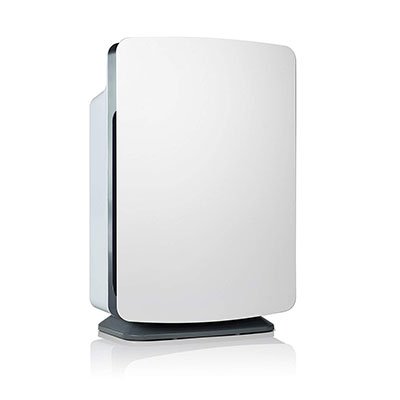
Alen BreatheSmart HEPA Filter Air Purifier Review

For those wanting an air purifier that can cover a large space, the Alen BreatheSmart HEPA is an excellent option. The BreatheSmart can filter and recirculate the air an 1100 square foot room in less than 2 hours while its WhisperMax technology keeps noise levels low.
The BreatheSmart is highly customizable. There are 14 color choices for the front panel, and 4 different HEPA filters that can be used depending on a user's needs (the unit comes with one).
The HEPA-Pure is best for most home environments and will reduce dust, pollen, dander, and other particles down to 0.3 microns at an efficiency of 99%. Also available is the HEPA-Silver which eliminates germs, the HEPA-FRESHPLUS which reduces airborne chemicals, and the HEPA-OdorCell for removing smoke and heavy odors.
The BreatheSmart has 4 manual speeds, including a turbo speed. Alternatively users can set it to run for 4, 8, or 12 hours. The BreatheSmart has an automatic mode that uses SmartSensor monitoring to adjust itself based on current air quality, which is displayed as a color code around the power button. This setting reduces energy use and prolongs filter life.
For maximum efficiency, the unit has an ozone-safe ionizer that can be turned on to help capture airborne particles. The air purifier has a Clean Air Delivery Rate of 300, which was verified by an ENERGY STAR independent test.
This home air purification system has a washable pre-filter, so the only thing that will need replacing is the HEPA filter, which lasts about 9 months. A panel light displays a yellow light when the filter is nearing the time for replacement.
The Alen BreatheSmart comes with a 60-day money-back guarantee as well as a lifetime limited warranty from the manufacturer.
Alen Breathesmart Benefits
- For rooms up to 1,100 square feet
- Energy Star Certified
- Offers 4 Types of HEPA filters
- SmartSensor that auto-detects and adjusts for air quality
- Ozone-safe ionizer
- Lifetime limited warranty
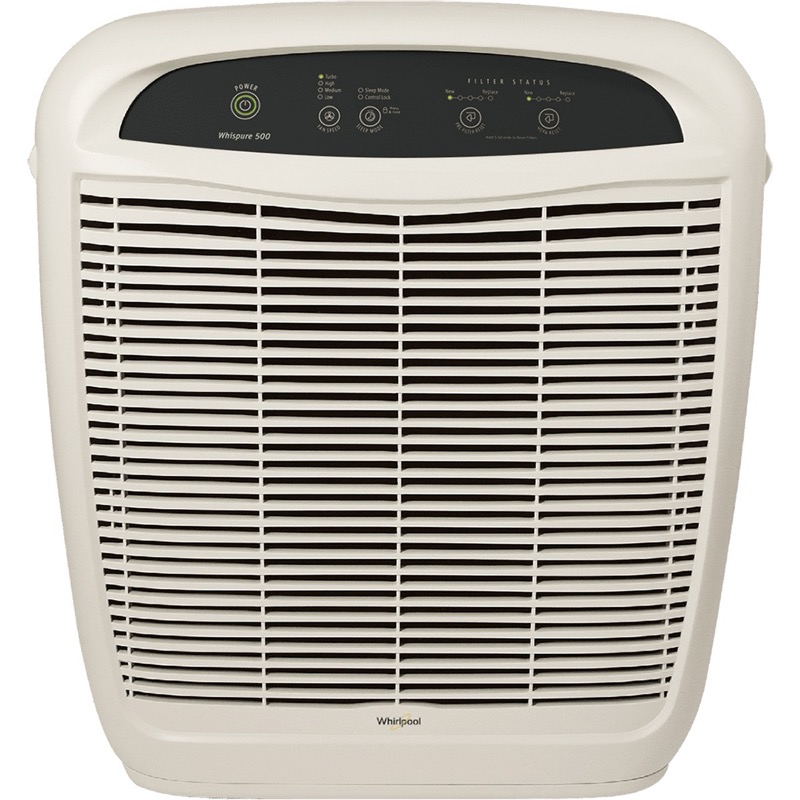
Whirlpool WP500 Whispure Air Purifier Review

The Whirlpool WP500 Whispure is the current version of Whirlpool's long-running Whispure line, replacing the older AP510-series units with a larger coverage area and updated electronics.
The WP500 has four fan speeds plus a turbo setting, and it includes a sleep mode that runs the fan quietly overnight. Electronic controls can be locked to prevent accidental changes to the settings.
Filtration starts with a washable charcoal pre-filter that catches larger particles and household odors, backed by a true HEPA filter rated to capture 99.97% of particles down to 0.3 microns. AHAM Verified testing puts the WP500's Clean Air Delivery Rate (CADR) at 328 for dust, 309 for smoke, and 331 for pollen, with the unit rated for rooms up to 490 square feet at roughly four air changes per hour.
Measured noise output runs from about 40 dB on the lowest fan speed up to 49 dB on turbo, so it stays reasonably quiet outside of its top setting. The pre-filter is washable and reusable, while the HEPA and charcoal filters are replaced as they wear.
The WP500 is available in pearl white and slate black finishes, has a top-mounted handle for moving it between rooms, and is backed by Whirlpool's standard limited warranty on the unit and motor.
Whirlpool WP500 Whispure Benefits
- For rooms up to 490 square feet
- True HEPA filter, 99.97% at 0.3 microns
- AHAM Verified CADR: 328 dust / 309 smoke / 331 pollen
- 4 fan speeds plus Turbo and Sleep modes
- Washable charcoal pre-filter
- Noise range: roughly 40-49 dB
- Limited manufacturer warranty
Coway AP-1512HH Mighty Air Purifier Review
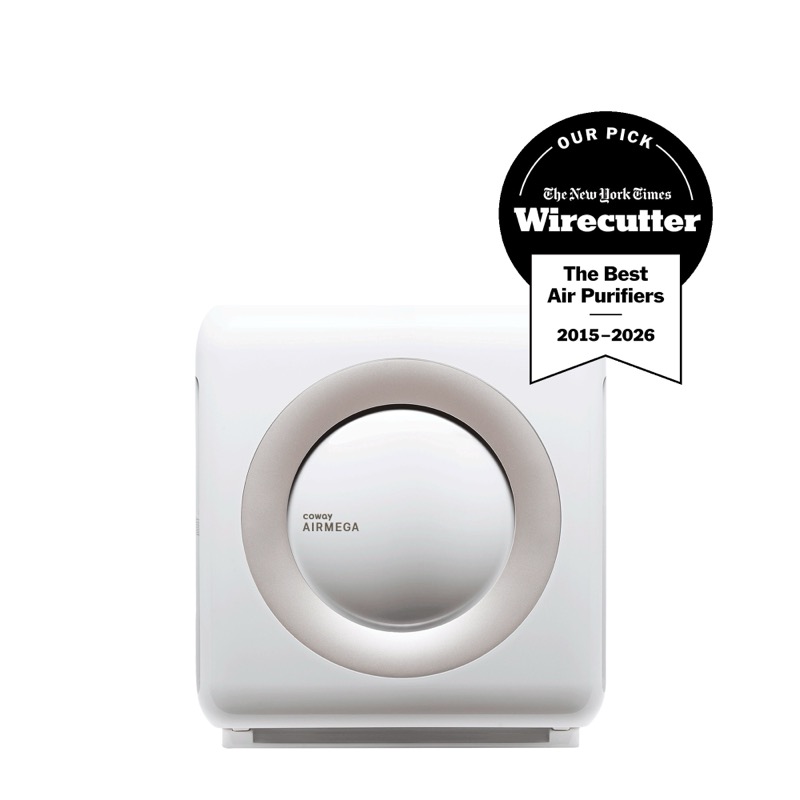
The Coway AP-1512HH Mighty has been a fixture on best-of lists for years, built around a four-stage filtration system: a washable pre-filter, a deodorization filter, a true HEPA filter, and an ionizer that can be switched off if you'd rather not run it.
Coway rates the Mighty for rooms up to 361 square feet, with an independently verified Clean Air Delivery Rate (CADR) of 246 for dust, 240 for pollen, and 233 for smoke. The HEPA filter is rated to capture particles down to 0.3 microns.
An air quality indicator on the front panel changes color based on a built-in sensor, and Auto mode adjusts fan speed to match current conditions. There are three manual fan speeds in addition to Auto and Eco modes, and the unit is ENERGY STAR certified.
Measured noise ranges from about 24 dB on the lowest setting up to roughly 54 dB at full speed, which makes it usable overnight in a bedroom on a low setting. At around 13 pounds and under 17 inches wide, it's easy to move between rooms.
Coway backs the Mighty with a limited manufacturer warranty, and replacement filters are widely available from Coway and third-party sellers.
Coway AP-1512HH Mighty Benefits
- For rooms up to 361 square feet
- True HEPA filter down to 0.3 microns
- CADR: 246 dust / 240 pollen / 233 smoke
- Auto and Eco modes with built-in air quality sensor
- ENERGY STAR certified
- Noise range: roughly 24-54 dB
- Compact and lightweight at about 13 lbs
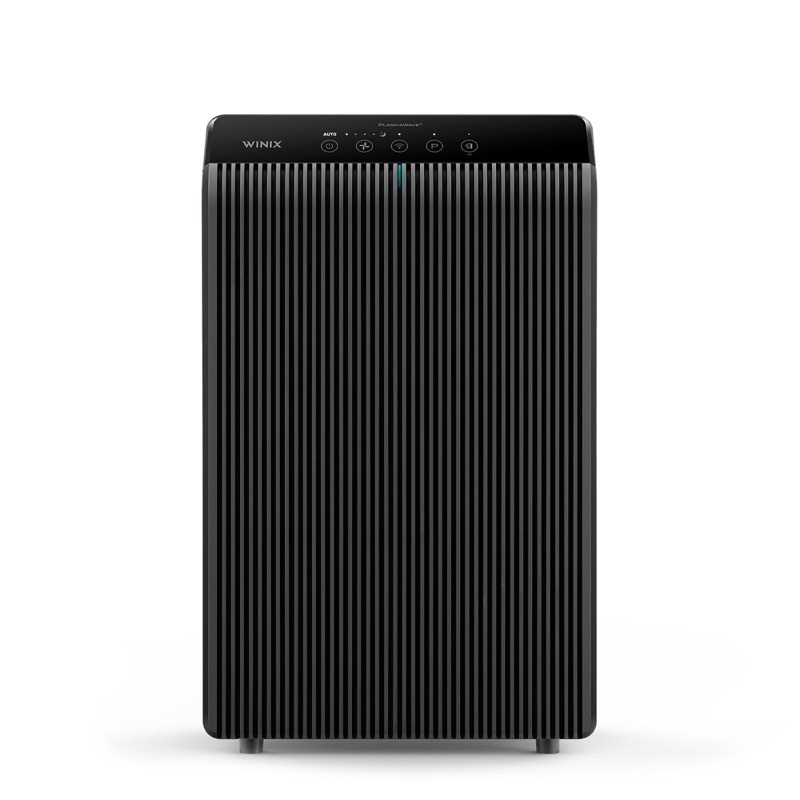
Winix 5510 True HEPA Air Purifier Review

The Winix 5510 succeeds the older FresHome line and adds WiFi and Alexa compatibility to Winix's familiar 4-stage filtration setup: a washable pre-filter, an AOC carbon filter for odors, a true HEPA filter, and PlasmaWave technology.
Winix's AHAM Verified testing rates the 5510 for rooms up to 392 square feet, with a Clean Air Delivery Rate (CADR) of 252 for dust, 247 for pollen, and 253 for smoke. The HEPA filter is rated to capture 99.99% of particles at 0.3 microns.
Dual smart sensors monitor the room and drive Auto mode, adjusting fan speed across 5 settings without input. An automatic Sleep Mode kicks in when the room darkens, dimming the light ring and dropping to as low as 23.5 dB on its quietest speed.
The Winix Smart App lets you check filter status and adjust settings remotely, and a filter replacement indicator flags when the HEPA or carbon filters need swapping — both are rated for roughly 12 months of typical use.
Winix backs the 5510 with a two-year warranty, longer than many competitors in its price range.
Winix 5510 Benefits
- For rooms up to 392 square feet
- True HEPA filter, 99.99% at 0.3 microns
- CADR: 252 dust / 247 pollen / 253 smoke
- WiFi and Alexa compatible via the Winix Smart App
- Dual smart sensors with Auto and Sleep modes
- As quiet as 23.5 dB on the lowest speed
- 2-year manufacturer warranty
Tips For Choosing The Best Air Purifier For Your Home
An air purifier can be a great addition to your home, especially if any occupants suffer from allergies, asthma, or any sensitivities to things like chemicals or smoke. Even without these specific challenges, though, an air purifier will make your home healthier and may even make it smell better. There are many factors to consider when choosing an air purifier for you home. Here are some of the most important:
- Your Specific Needs: While there are several excellent all-purpose air purifiers, there are also air purifiers designed specifically to handle common air irritant issues. If you or someone in your home has allergies, you should consider an air purifier with a HEPA filter that is designed specifically to eliminate common airborne allergens like pollen, mold spores, and pet dander. Similarly, there are air purifiers specifically designed for removing smoke or for filtering chemicals. If any of these specific needs apply to anyone in the home, it's a good idea to consider units designed specifically to serve these needs.
- Size and Location in Home: It's important to consider the size of your home when purchasing an air purifier. Choose a unit that will cover the square footage of your home. You can also consider how frequently an air purifier will filter the entire space. If you want to ensure that the air is filtered frequently, you can choose your air purifier based on this feature.
- Cost Plus Operating Costs: In addition to considering the cost of the unit itself, you should also consider the operating costs. Filters will need to be changed regularly. The cost of electricity consumption is also something to consider, which can be estimated by the wattage used. Choosing a unit that is more energy efficient will save you money.
Air Purifiers: Frequently Asked Questions
Do air purifiers actually work?
For airborne particles — dust, pollen, smoke, pet dander, and mould spores — a true HEPA purifier sized to the room measurably lowers the concentration you breathe. They do little for gases and odours without a substantial activated-carbon filter, and nothing for allergens already settled in carpet and bedding.
What CADR do I need for my room?
Clean Air Delivery Rate should be at least two-thirds of the room's floor area in square feet, and more for wildfire smoke. A 300 sq ft room wants a smoke CADR around 200 or higher. Sizing up lets you run the unit on a lower, quieter setting.
Should I avoid purifiers with ionizers or ozone?
Skip anything marketed as an ozone generator — ozone irritates the lungs. Ionizers are lower risk but produce a little ozone and mostly make particles stick to surfaces rather than capturing them. A straightforward HEPA-plus-carbon purifier is the safe, effective choice.
How often do the filters need replacing?
True HEPA filters last 6 to 12 months. Carbon filters last 3 to 6 months, sooner with heavy cooking odours or smoke. Washable pre-filters just need vacuuming. Filters are the real running cost, so factor them in before you buy.
Do air purifiers help with allergies and asthma?
They can reduce airborne triggers like pollen and dander, and running one in the bedroom overnight helps some people. Treat it as one part of a plan that also includes source control — dust-mite covers, no indoor smoking, and vacuuming with a sealed HEPA vacuum.
Should I run an air purifier all the time?
Yes. A purifier only cleans the air while it is running, and indoor air quality changes through the day with cooking, traffic, and pollen. A correctly sized unit on a low or auto setting runs 24/7 for only a few dollars a month.
Published: 5th Feb, 2025 · Last Updated: 31st Aug, 2026
We re-check the picks in this guide periodically and update it when models are discontinued or better options appear.

Tumay Kilinc
Tumay co-founded ReviewsByPeople.com in 2018 and focuses on turning long, confusing buying decisions into straightforward recommendations across electronics, outdoor gear, pets, beauty, clothing, and home & garden. Reviews are built by comparing real specs and verified buyer feedback rather than repeating marketing copy, and reader questions in the comments get read and answered directly.
Comments
Leave the first comment