
Introduction
People are always looking for easier ways to drink more water throughout the day, and a good water cooler makes that a lot less of a chore. Whether you're filling a bottle before a workout or just want a cold glass with dinner, having a dedicated dispenser in the kitchen or break room means you're never digging through the fridge for a jug. Home and office water coolers come in a wide range of shapes, sizes, and price points, so there's a model out there for almost any space and budget.
Most shoppers want a cooler that gives them options. Beyond plain cold water, a lot of people also want room-temperature water on tap, and a growing number of models throw in hot water too, useful for tea, instant oatmeal, or a quick cup of coffee. The dual- and tri-temperature setup has become the norm rather than the exception, though it still pays to check the spec sheet before you buy.
A few practical things are worth thinking through before you settle on a model.
Start with the space you actually have. If you already know where the cooler is going to live, measure that spot first. Cabinet-style coolers, slim bottleless units, and countertop dispensers all have very different footprints, so getting the dimensions right up front saves a return shipment later.
Household size matters too. A slim two-person unit that holds a single bottle is plenty for a couple, while a busy family or a small office will want something that can keep up with heavier daily use, either a larger reservoir or a bottleless model that never runs dry.
Don't forget about power access. Nearly every electric cooler needs a standard grounded 115-volt outlet nearby. If the spot you had in mind doesn't have one, you'll either need an extension cord (not ideal for something that runs constantly) or a different location altogether.
Water coolers have come a long way in terms of design and everyday convenience. Manufacturers have clearly paid attention to the small details that make a unit pleasant to live with day to day. A removable drip tray is one feature that's become nearly universal, and for good reason.
That tray keeps spills off the floor and makes cleanup simple, you just pull it out, rinse it, and pop it back in. Separate hot and cold taps are common on mid-range and higher-end units, giving everyone in the house or office exactly the temperature they want without waiting around.
Newer coolers also lean into smart extras: LED status lights, digital temperature displays, child safety locks on the hot tap, and even built-in UV or ozone self-cleaning cycles that sanitize the internal lines automatically. There's a wide enough range of pricing that you can find something solid whether you're outfitting a home kitchen or a busy office break room.
Best Home Water Coolers
| Pick | Best For | Standout Feature | Check Price |
|---|---|---|---|
| Avalon A4BLWTRCLR | Best for the Family | Bottom-loading design, no heavy jug lifting | Check Price |
| Brio Moderna | Best Bottleless | Plumbed in, self-cleaning cycle, never runs dry | Check Price |
| Igloo IWCBL353CRHBKS | Best Value | Bottom-loading with a child safety lock on the hot tap | Check Price |
Avalon A4BLWTRCLR Bottom Loading Water Cooler Dispenser Review

Avalon has built a solid reputation in the home water cooler space, and it offers a whole lineup of water coolers across different sizes and price points. That range is a genuine strength, since it means you can usually find a model that matches your kitchen instead of settling for whatever's available. The A4BLWTRCLR is one of the more popular picks in the lineup, but it's far from the only option worth a look.
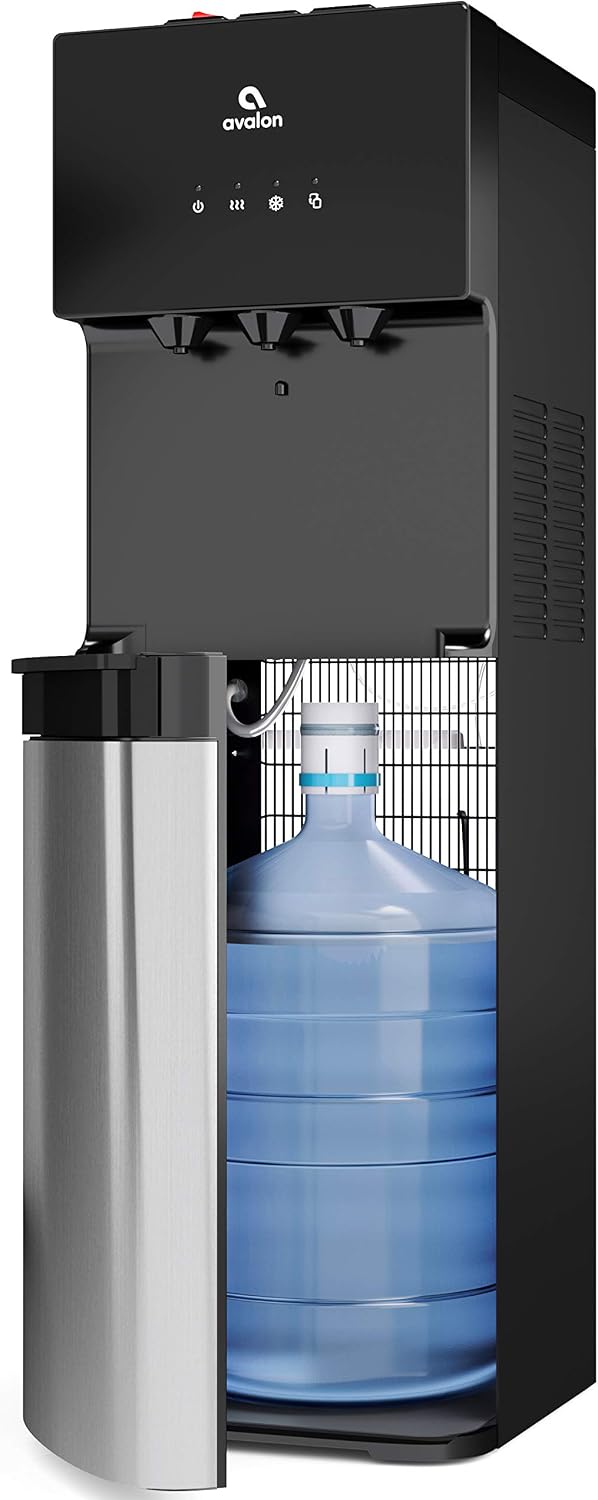
What sets the Avalon A4BLWTRCLR apart is its bottom-loading design. Instead of hoisting a heavy 5-gallon jug up and over the top of the unit, you slide it into a cabinet at the base and an internal pump does the lifting for you. That's a small thing until you've thrown your back out changing a bottle the old-fashioned way, then it's a big thing.
The bottom-load setup also makes the unit friendlier for kids and anyone with limited mobility, since there's no reaching or tipping involved to swap a bottle. The stainless steel cabinet gives it a clean look that doesn't stand out awkwardly in a kitchen, and the footprint is compact enough to tuck into a corner.
It runs three temperature settings, hot, cold, and room temperature, so everyone in the house gets what they want without a second appliance. A child safety lock on the hot tap is a nice touch if you've got young kids wandering into the kitchen unsupervised.
One thing worth knowing going in: this is a bottled water cooler, not a bottleless one, so you'll still need a delivery service or trips to the store for 3- or 5-gallon jugs. If you'd rather skip bottles altogether, it's worth cross-shopping a plumbed-in model instead.
Energy use is reasonable for a unit that's running around the clock, and Avalon's UL and Energy Star certifications are worth checking on the listing before you buy, since exact ratings can vary slightly between production runs. Overall it's an easy recommendation for a household that wants hot and cold water on tap without a lot of fuss.
Avalon also sells bottleless versions of similar cooler bodies if your kitchen already has a water line nearby. Comparing the bottled and bottleless options side by side before deciding is worth the extra five minutes, since the ongoing cost of bottle delivery adds up over a year or two.
Brio Moderna Self-Cleaning Bottleless Water Cooler Dispenser Review

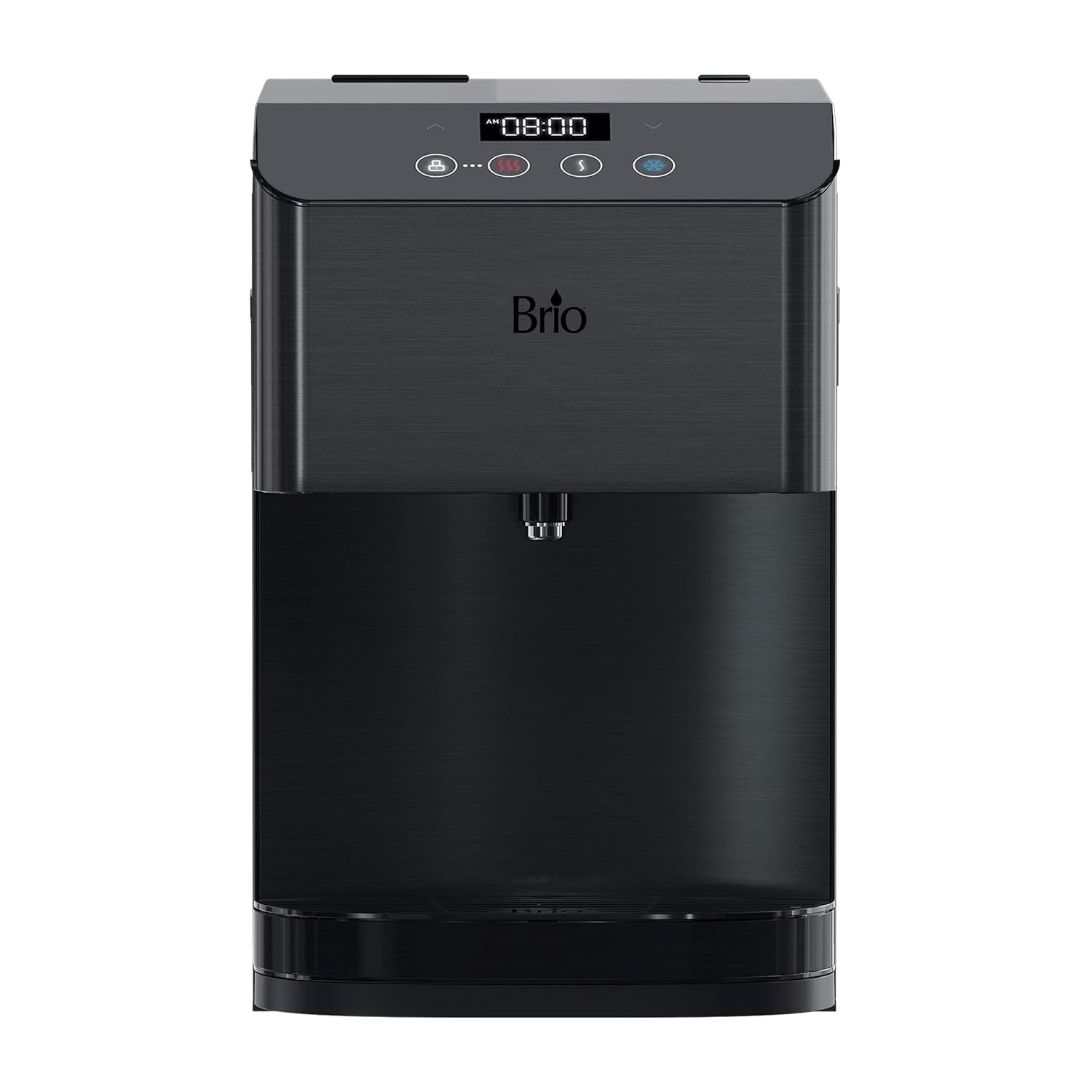
Brio has carved out a name for itself with point-of-use coolers that hook straight into your home's cold water line, which means no bottles to store, no delivery schedule to plan around, and no lugging jugs in from the car. The Brio Moderna is the company's flagship countertop model, and it packs in a lot for something that sits on a kitchen counter.
Because it's plumbed in rather than bottle-fed, the Moderna never runs dry the way a bottled cooler can when you forget to reorder. It draws from your existing supply and filters it on the way out through a multi-stage filtration system that's built to cut down on sediment, chlorine taste, and other common contaminants.
It dispenses hot, cold, and room-temperature water, and the temperature on both the hot and cold sides is adjustable, so you're not stuck with whatever the factory default happens to be. A digital display and LED night light make it easy to use in a dim kitchen without fumbling for the light switch.
The standout feature is the built-in self-cleaning cycle. At the push of a button, the unit runs a UV or ozone sanitizing pass through its internal lines, which is the kind of maintenance that's easy to skip on other coolers but genuinely matters for water taste and hygiene over time.
Setup takes a bit more effort than a bottled cooler since it needs a cold water line within reach, and most installation kits are designed for a DIY-friendly connection under the sink or behind the counter. If you're not comfortable with basic plumbing, it's worth budgeting for a short visit from a handyman.
It's a countertop unit, so it does need a bit of clear counter space and access to an outlet nearby. For anyone tired of bottle delivery costs and empty-jug days, though, the tradeoff of a slightly more involved setup is usually worth it.
Compared to Brio's bottom-load bottled models, the Moderna trades a bit of installation simplicity for zero ongoing bottle costs, which tends to pay for itself within a year or two of regular use.
Igloo IWCBL353CRHBKS Bottom Loading Water Cooler Dispenser Review

Igloo is a name most people already associate with coolers of a different kind, but the company also makes a solid line of home and office water dispensers. The Igloo IWCBL353CRHBKS is a bottom-loading model built for people who want the core features of a good cooler without paying for extras they won't use.
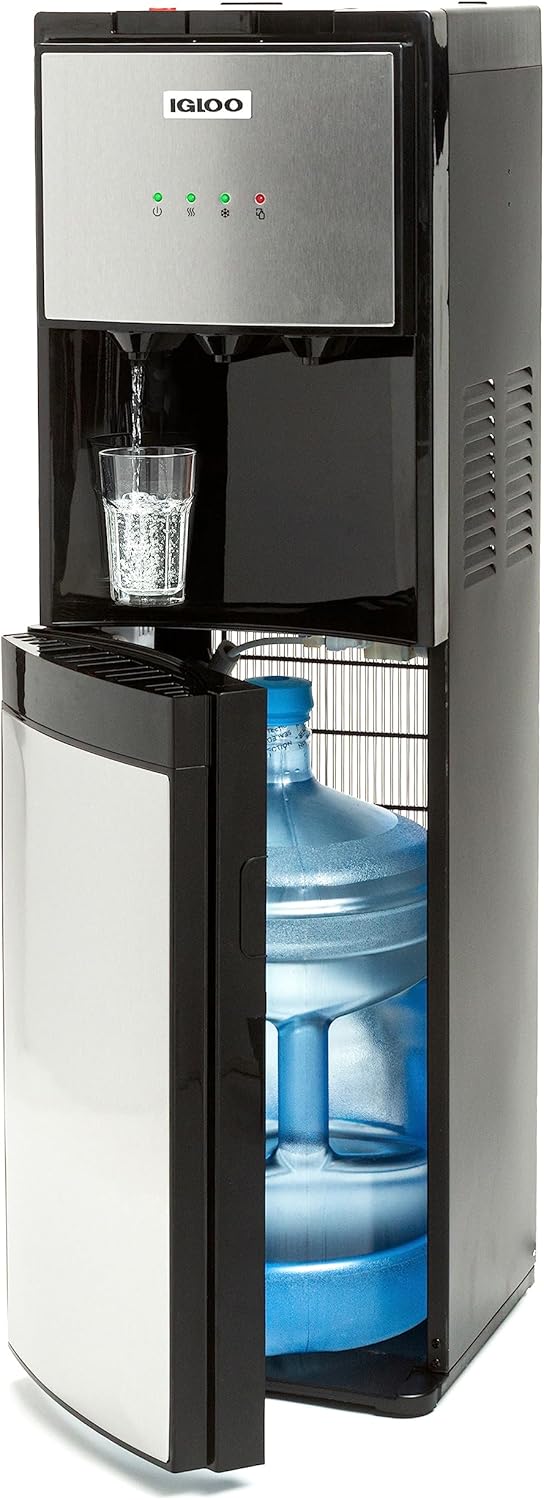
Like the Avalon model above, this one loads from the bottom, so there's no wrestling a full 3- or 5-gallon jug over your head to seat it. That alone makes it a lot friendlier for anyone dealing with a bad back, or just anyone who's tired of spilling water down their arm mid-swap.
It dispenses hot, cold, and room-temperature water from three separate taps, and the hot tap has a child safety lock, a genuinely useful feature if there are kids in the house who like to push buttons. The stainless steel front cleans up easily and looks reasonably sharp for the price.
Size-wise it's built to hold both 3- and 5-gallon bottles, which gives you some flexibility depending on what your local delivery service or store stocks. It's a compact enough unit that it fits into a kitchen corner, home office, or small break room without hogging floor space.
Where this model really earns its "best value" label is price. It doesn't try to compete with smart displays or bottleless plumbing, it just does the basic job of hot and cold water on tap reliably and at a lower cost than most of the fancier competition. For a dorm room, a small apartment, or a starter setup in a new office, that's usually exactly what people are looking for.
The tradeoff, as with any bottled cooler, is that you're still responsible for keeping bottles stocked. If that's not a dealbreaker, it's hard to find a more budget-friendly bottom-load option that still covers hot, cold, and room temperature water.
If a full cooler is more than your household needs, a water filter pitcher is worth a look too.
Water Coolers: Frequently Asked Questions
Bottled or bottleless water cooler?
A bottled cooler works anywhere and runs on 3 to 5-gallon jugs; a bottom-load model hides the jug and saves lifting. A bottleless cooler plumbs into your water line through a filter, so there are no jugs ever, but it needs a nearby water connection and a short install.
How much electricity does a water cooler use?
A hot-and-cold cooler uses roughly 0.5 to 1.5 kWh a day, most of it keeping the hot tank warm. An energy-saving switch on the hot tank, or choosing a cold-only model, cuts that noticeably.
How do I clean and sanitize a water cooler?
Every one to three months, unplug and drain it, wipe the reservoir, run a sanitising solution of diluted bleach or citric acid through the taps, then flush thoroughly with fresh water. Bottleless models also need their filter replaced periodically.
Is the hot water hot enough for tea, and the cold water cold enough?
Hot tanks reach about 185 to 200°F, hot enough for tea but just below a rolling boil, and cold tanks hold water around 45 to 50°F. Neither is unlimited — the tank dispenses a set amount before it needs time to recover.
Are water coolers safe around children?
Choose one with a child-safety lock on the hot tap, as the scald risk is real. Bottom-load and bottleless models also remove the tip-over hazard of a jug mounted on top.
Is bottled delivery or a bottleless cooler cheaper?
Bottleless usually comes out ahead after one to two years, with no delivery fees or bottle deposits — just filter changes. Bottled delivery makes sense if you cannot run a water line or you use very little.
Published: 5th Feb, 2025 · Last Updated: 31st Aug, 2026
We re-check the picks in this guide periodically and update it when models are discontinued or better options appear.

Oğuz Tokatlı
Oğuz co-founded ReviewsByPeople.com in 2018 and has worn most of the hats since: building the site itself as a full-stack developer, editing every guide before it goes live, and personally researching and writing across electronics, outdoor gear, kids & baby products, home & garden, health, and more. The approach is to dig through spec sheets, verified buyer feedback, and manufacturer data before making a recommendation, and to keep guides updated as products change rather than letting them go stale.
Comments
Leave the first comment